
EdNews Virginia | January 20, 2026
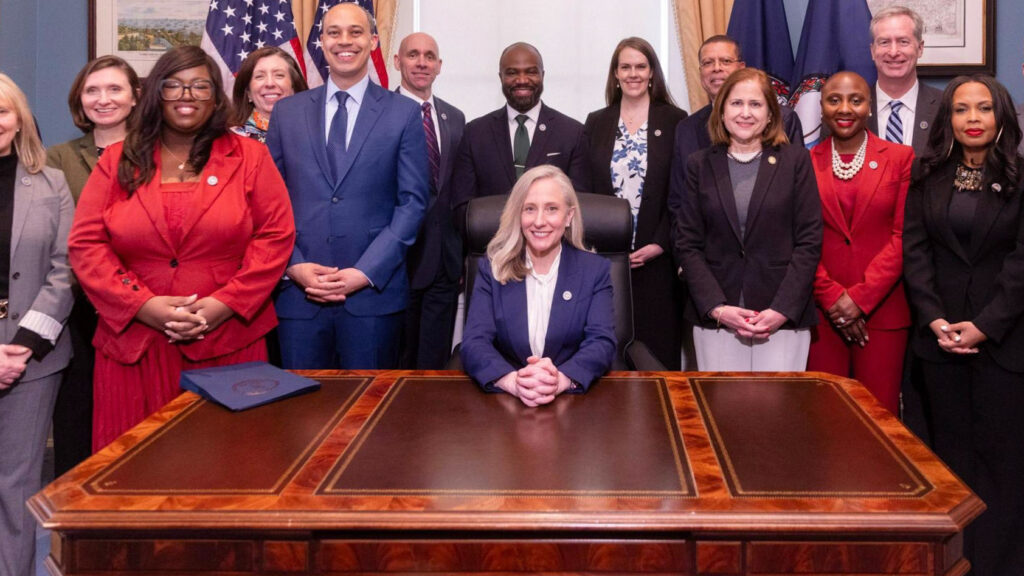
On her first day in office, Governor Abigail Spanberger signed Executive Order Four, titled “Committing to Academic Excellence and Affirming the Commonwealth’s Commitment to Providing a High-Quality Public Education.” The order serves as the administration’s formal roadmap for K-12 priorities, specifically targeting what the Governor describes as “instructional gaps” in literacy and mathematics. It directs the Department of Education to review and strengthen state-level instructional systems to ensure students are prepared for the “21st-century economy.”
The order grounds its directives in recent performance data, noting with concern that “in the 2024-2025 school year, less than three-quarters of Virginia students met state benchmarks on the Standards of Learning (SOL) reading assessment.” To address these numbers, the Governor has ordered the state to identify structural barriers to achievement, particularly for underserved populations. She emphasizes in the document that “the Commonwealth must ensure that every student is met with high expectations and every classroom is led by a world-class educator who is supported by the state.”

While EO 4 continues to use the language of “rigorous standards,” it nevertheless signals a transition from the focus of now-former Governor Glenn Youngkin. While Youngkin’s early executive actions — most notably Executive Order One — emphasized parental oversight and the removal of “inherently divisive concepts,” Spanberger’s order shifts the focus toward direct instructional investment and institutional accountability. While the new order does not explicitly repeal any parental rights frameworks, its overall theme implies a return to a more conventional, resource-focused approach to education governance.
READ THE EXECUTIVE ORDER: